









This past Thanksgiving marked the two-year anniversary of when I was shot. The weapon was a Smith & Wesson high performance revolver, loaded with eight .357 Magnum bullets. The perpetrator fired all eight rounds. I was struck three times. Miraculously, my injuries were nominal: three cracked ribs and a collapsed lung. I lost a lot of blood. It could have been worse. One bullet, “a thru and thru,” passed close to my spine.
I did not talk publicly about what had happened. I reduced my circle of friends to a chosen few, and underwent perfunctory trauma therapy with a lovely woman named Farhia at Harborview Medical Center. Talking about what happened in a therapeutic setting or among loved ones wasn’t necessary for me to regain equanimity. I resumed writing a new novel MAYA DARLING that, until then, was in its infancy—an idea that still needed to be executed.
The story of MAYA DARLING was told through the lens of Goya’s black paintings. Two months before I was shot, I was in Madrid, where I saw fourteen of the black paintings at the Prado. I stared at the paintings for two hours, not one painting was darker than another; some were grotesque; all were grim. The character Maya Darling was conjured from this dark place.
Maya Darling is a young artist, innocent and full of promise. She rises too fast in the New York City art world. She is Icarus flying too close to the sun. With her wings of wax, she is heading for a meltdown. Her crash landing takes place on the street.
The year before I went to Spain, I walked among the addicted, the sick, the poor. I had been ministering to the homeless through Christ Our Hope Catholic Church in Downtown Seattle. I witnessed the ravages of fentanyl addiction. The young grew old overnight, lost their teeth, and became stooped, hunched, shuffling while they walked.
Those without a home were living in alleys or sprawled on sidewalks, covered by makeshift tents, tucked under blankets, tarps, sleeping bags. I imagined I was one of them. I know there have been times when my life could have gone one way or the other.
The people on the street were neither good nor bad but an amalgam of all the things that make us human. I made friends with them. I learned about their lives by listening to what they had to say. I learned that people on the street were more honest than everyone else because they had nothing left to lose.
Some of them have died. Exposure. Infections. Stabbings. Beatings. Drug overdoses. Gunshot wounds. I have no illusions about what would have happened had I died when I was shot. My loved ones would have suffered, and I would have left behind an unfinished book.
In the aftermath of getting shot, I wrote every day. Getting shot and almost dying had nothing to do with the story. Through the process of writing, I held darkness and light together at the same time, in the same space. Embracing good and the bad, darkness and light, might be a function of my writer’s radar, but accepting the paradox of what it means to be a human being is something all of us must do. I thought MAYA DARLING would be a good gift to give to the world.
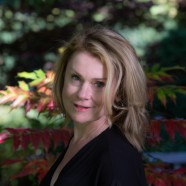
Patricia Vaccarino
Patricia Vaccarino is an accomplished writer who has written award-winning film scripts, press materials, articles, essays, speeches, web content, marketing collateral, and eleven books.