Homelessness

Pete Soukus: A Chance to Trust

Category: 

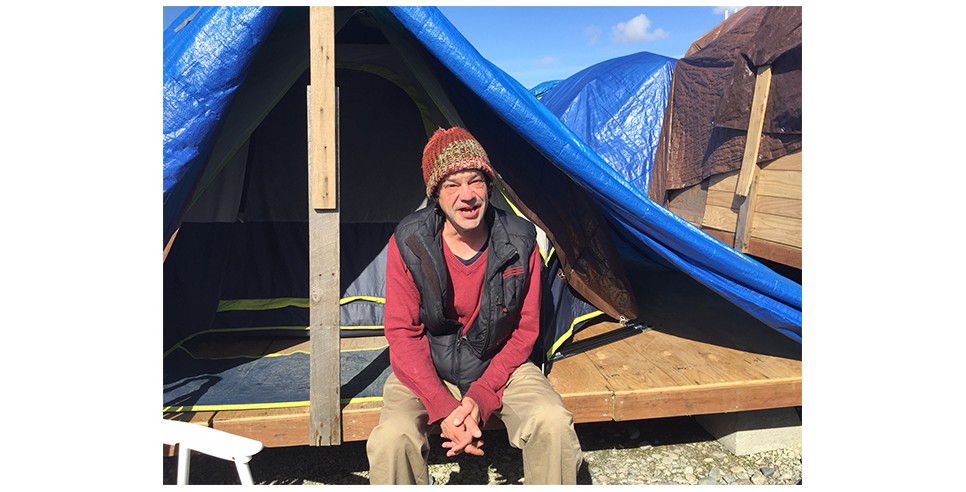
For years, Pete Soukus lived on top of the hill in Seattle’s wealthy Magnolia neighborhood that overlooks Interbay and Tent City 5. Pete still lives in Magnolia, but his new home now lies in the shadow of the hill, inside of Tent City 5.  Until alcohol took over his life, Pete had a career in product management and supply-chain logistics, a home and a family.  Then according to Pete, “I drank myself to the point of almost losing my life.”

Pete didn’t lose his life, but he lost his fiancé, his home and his job. He hasn’t seen his kids in years.  He remembers spending one night hunkered down under a bush after drinking a bottle of hand sanitizer.

In the words of the immortal Janis Joplin, who sang Me and Bobby McGee, “Freedom is just another...

read more..

Latest Posts in Homelessness

The Good Gift

This past Thanksgiving marked the two-year anniversary of when I was shot. The weapon was a Smith & Wesson high performance revolver, loaded with eight .357 Magnum bullets. The perpetrator fired all eight rounds. I was struck three times. Miraculously, my injuries were nominal: three cracked ribs and a collapsed lung. I lost a lot of blood. It could have been worse. One bullet, “a thru and thru,” passed close to my spine. 


Vine Maple Place: Ending homelessness to break generational cycle of poverty

In Maple Valley, Washington, a leafy suburban city southeast of Seattle, nine churches began working together at the beginning of this century when they detected a growing problem in their community: family homelessness. 


Florida Climate Change and its impact on families living in Poverty

The devastating impacts of climate change are already visible across the landscape of the United States, and our most vulnerable communities, including individuals and families living in poverty and experiencing homelessness, are being unfairly impacted and hurt the most.


Homelessness and the Digital Divide

At least one-third of the homeless do have access to the internet. Most of the homeless population, however, do not have internet access, which is essential when looking for housing, jobs, applying for social service assistance, and accessing medical care.


How can we help?

There is a certain depersonalization in examining the data around the homeless when we are dealing with a mammoth problem that diminishes the intrinsic dignity and value that is inherent in every human being. Then when we see the homeless up close, we often don’t know what to do. “Oh, it’s tragic,” you might say and you can look away, but many of us are not able to turn away. How can we help?