Yonkers

Destiny –without an e​

Category: 

I grew up as a working class kid in Yonkers, New York. My parents sent me to Catholic schools, where I learned equal doses of discipline and terror. I spent my third and fourth grade in public school where all of my friends were Jewish. My teacher, Mrs. Chachkes, came from a Jewish merchant family that lived in south Yonkers and sold furniture.  She wore her blonde hair parted on the side in a soft wave that had the tendency to fall forward and cover her left eye.  She told me that I could rhyme well and master long words with complex meanings. She told me I was a natural born writer.

By the time I returned to Catholic school, I had a nun instruct the class to write a poem without using the letter e. No one could do it except for me. After I turned in my poem,...
read more..

Latest Posts in Yonkers

June 2026 Magazine


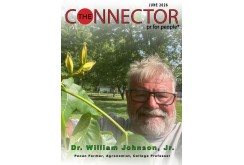
Jobs and work have always been our key topics for June. While everyone is hellbent on talking about A-I and technology, we need to keep in mind that traditional career opportunities abound and offer deep job satisfaction. Barbara Lloyd McMichael writes about a farmer who owns Johnson Pecan Farms in Beebe, Arkansas. Dr. William Johnson, Jr. is growing crops and cultivating farmers for the next generation. As a longtime farmer on a farm that has been associated with his family for generations, he knows the challenges firsthand.  My Friend Sue is an essay about a wonderful friend. I’m astonished that the things we did as little kids predicted who we would become as adults. I think we might have been acorns. A theory about acorns asserts who we are destined to become is imprinted on our souls from the first moment of our lives. Robin Lindley interviewed renowned Professor Doug Underwood, who has recently launched his debut novel, Always Tessie, a Tale of the Turbulent 1960s that is set in the Pacific Northwest. Robin Lindley also interviewed Australian Director Anthony Maras about his new film “Pressure” that captures the intense planning for D-Day immediately before the invasion during World War II. Please see the entire interview that was originally published in the Hollywood Progressive.  ––Patricia Vaccarino


The Crowded Shroud: Weird, Wonderful, Wicked

The story surrounding Florenz Baron might prove to be more interesting than her novel The Crowded Shroud. Born as Florenz Hasratoff in 1919, she spent most of her life living as a bohemian artist in conservative, blue-collar Yonkers. 


My Friend Sue

Whenever I traveled to New York, I visited Sue at the Museum, making up for the time lost between us. We both marveled that we had escaped a blue collar fate. Other Yonkers girls took service jobs as health care workers or waitressing, a few taught in public schools. There wasn’t anything intrinsically wrong with these jobs, except they were so Yonkas.


The Horst Wessel Song: A Hymn for Cardinal Timothy Dolan

Since I was a small child, I have been fascinated with the Catholic Church. When I was six, I wanted to be like Mary, Mother of Jesus Christ, and spend eternity with the angels and archangels. By the time I was twelve, I learned that the Catholic Church had demons among its ranks and did not always live according to the words expressed by Christ. I learned that the Catholic Church, under the leadership of Pope Pius XII, did not act to save Jews during the Second World War. As a matter of fact, the Vatican played a significant role in helping Nazi war criminals flee overseas in a secret escape network known as The Italian Ratline.


NOTES FROM THE WORKING CLASS: The Silence of the Dutch

Among the Dutch, the artist Anselm Kiefer and the author Anne Frank, there is a connection that is found in silence. On Sunday, May 4, 2025, a two-minute period of silence brought the city of Amsterdam to a halt. The streetcars stopped running. The streets emptied. No cars, bicycles or people. Boats stayed moored on the canals. The trees across the road in Vondelpark appeared still. The sun seemed to hide behind the clouds. Life did not stir for two minutes.

The two-minute silence was meant to commemorate Liberation Day—The Netherlands’ liberation from the Nazis eighty years ago.