







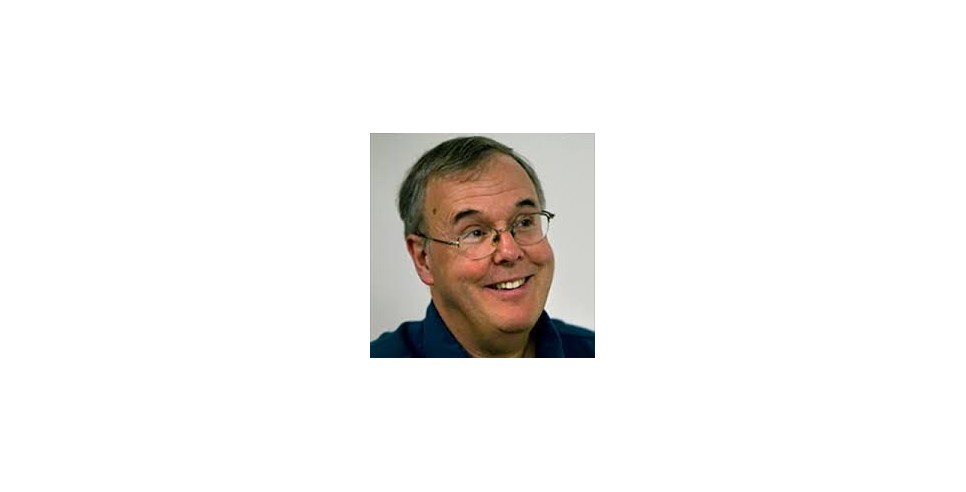
Distinguished University of Washington journalism Professor Doug Underwood began a novel in his twenties, a half century ago. The story percolated and evolved through the decades. At last, at age 77, he launched his debut work of fiction, Always, Tessie(Luminare Press), a historical novel
Before his novel appeared, Professor Underwood was already a prolific author. As a revered veteran journalist and renowned college teacher, he has written six academic books and hundreds of articles for lay readers as well as scholars. He dreamt of being a novelist in college but put his novel aside, and went on to jobs in news reporting. He jokes that every journalist has a novel inside, “but it should probably stay there.” After drafting several versions of Tessie over the years, the coming-of-age novel recently appeared to acclaim and enthusiastic reviews.
In Always, Tessie, Professor Underwood relates the story of young lovers Tessie and Derek who live in a Portland, Oregon suburb during the turbulent 1960s. He captures the concerns of the period as the Vietnam War raged, a civil rights movement challenged racism and segregation, and women demanded equal rights as they gained more personal freedom with the advent of the birth control pill. The beauty and relative isolation of the Pacific Northwest loom over the young couple and their friends as they deal with past trauma, social pressure, the threat of the military draft, intense competition, and other ominous developments in their rapidly changing world.
An expert in literary history, Professor Underwood conducted extensive research on the history of the sixties, the Portland setting, psychology, trauma, and more in writing his novel. He even provided a glossary to help readers unfamiliar with the history to understand the context of his novel.
Professor Underwood began teaching with the University of Washington communications faculty in 1987 after a 13-year career as a political journalist and investigative reporter. He was the Olympia legislative bureau chief and the chief political writer for the Seattle Times (1981-1987); a congressional correspondent and environmental specialist in the Gannett News Service’s Washington, D.C., bureau (1976-1981); and a labor and government reporter for the Lansing (Mich.) State Journal (1974-1976).
Professor Underwood teaches courses in media ethics, media and religion, journalism and literature, trauma and literature, and media management and economics. He has written numerous articles on media issues for popular and academic publications as well as scholarly books including Literary Journalism in British and American Prose (2019); The Undeclared War between Journalism and Fiction (2014); Chronicling Trauma (2011); Journalism and the Novel (2008); From Yahweh to Yahoo! (2002); and When MBAs Rule the Newsroom (1993).
Professor Underwood recently talked about his new novel at a café in Seattle’s University District.
Robin Lindley: Thank you, Professor Underwood, for discussing your epic debut novel, Always, Tessie.
You are known as a distinguished professor of journalism at the University of Washington, and you have written award-winning scholarly books on journalism, literature, and trauma. How did you decide to write a novel now after years of reporting and then teaching for almost 40 years?
Professor Doug Underwood: It is actually both a complicated answer, but also a very simple answer. Like many people who have become journalists, I was a literature major in college, and I very much wanted to be a novelist. And back then, that is what many journalists hoped. There is an old joke about how every journalist has a novel in them, and that is right where it should stay.
And so, as I was breaking into the journalism field, which I did by getting a master’s in journalism at Ohio State and getting a reporter job in Lansing, Michigan, I was simultaneously trying to write a novel. I had written one my first year after college, and I gave up on it before I finished it. But I had an idea for a different one.
I left Michigan and moved to the Washington DC bureau of the chain that owned the Michigan paper, and at night I would come home and write this novel.
I had the good fortune to have a mother who wrote young adult fiction and had an agent. My mother had a history with publications and had worked as an editor at Houghton Mifflin, one of the great old publishers. She also wrote her novels while I was being raised and, in some small way, sent the message that if you cannot write a novel about your life, maybe your life did not have much meaning. And my brother had the same affliction.
I finished my novel and showed it to my mother, and she really liked it. She sent her agent some of the reasons she liked it, and her agent said, “I will work this book.” And so, for two years, she tried to get the book published until she gave up. I can still laugh about it, I suppose. When she sent it to Farrar Strauss, it made it all the way up to the top editor, and I was told he went out to Fire Island to read it. When I got my manuscript back, it had sand and suntan lotion on the pages. But he did not like it. And I also had a close miss at Harper and Row.
But in retrospect, they were right. I was still not a fully developed novelist. I was no Ernest Hemingway. I was not someone who could come across as worldly wise, like Hemingway could when he was 25 and wrote The Sun Also Rises. It was a hard disappointment, but I accepted that, and I went to my plan B: just working on my journalism career. I worked in journalism for 13 years with Gannett in Washington, DC, and in Lansing, Michigan. Then I got a job at the Seattle Times. I am a native of Portland, Oregon, so I wanted to come home to the Northwest
After six and a half years at the Times, I got an incredible break when I was hired as a professor to teach in the UW Department of Communication. I took out the novel when I was teaching here early on and sent a fixed-up version back to my agent who had already retired. Her daughter was running her mother’s agency in New York, and she would not even show my new-old book to her mother. Basically, I put the book back on the shelf again, and I figured it was gone. I did not even really know where copies of it were after that.
Robin Lindley: How did you retrieve a copy of the novel?
Professor Doug Underwood: During COVID, one of my good friends, someone I went to college with who was also a journalist in Washington, D.C., found an old copy of the manuscript when he and his wife were downsizing at retirement time. I had given it to him years ago to see if he could edit it. He got about a third of the way through and apparently was not that impressed. He sent it back in the mail.
The manuscript arrived during COVID while I was teaching an online journalism and literature class on narrative nonfiction writing. I looked at the book and said, what if I sat down and took this book and applied the same standards that I teach to my students for how to upgrade their writing. Using that mechanism allowed me to go through the book and find what I thought was good and useful, and I could carve out the stuff that was not. That was beneficial because I was much more in tune with the dialogue of the young characters I had written about earlier. I kept much of the dialogue but also deleted much because I really was not mature enough in my twenties. I went to work on it and, to my absolute amazement, I was closer to what I would call literary standards of writing here in my seventies.
There are certainly very few new novelists who show up on the scene in their seventies. But in my case, I felt I had elevated my writing. I know a number of people who were also journalists back in my time in Seattle newspapering who have gone on to write books, such as Tim Egan, who has won a Pulitzer Prize and a National Book Award. I sat down and figured okay, maybe I can take another shot at this book.
Robin Lindley: And then you endured a journey to see the book published. Congratulations on your persistence. I can only imagine your hard work. Your book is based on deep research, and it is set in a fictional Portland suburb evoking the town where you were raised. Can you talk about the importance of the setting and the autobiographical aspect of your novel?
Professor Doug Underwood: It is somewhat autobiographical. Many of the characters are thinly based on people that I went to school with, or I knew, or were my friends, or in this drinking club that is a central part of the book. But the characters are quite fictionalized, too. As most writers do, I take some elements of an actual personality but then let my imagination reshape it.
In my original version, there was only the voice of Derek, my chronicler. A woman editor who had worked at the New Yorker was living out here and agreed to work with me. She advised me that, in this day and age, you need to include a woman's voice. I already had the characters, the two high school lovers who were the center of the story, so I brought the female character’s voice into the story, and now, all through the book, you get Derek's voice and Tessie's voice.
Robin Lindley: And you grew up in a Portland suburb with a love for the verdant environment.
Professor Doug Underwood: The Pacific Northwest setting came to me naturally. I discovered that I had a good feeling for the world of the Pacific Northwest, the people in it, the role of nature and its beauty, and its other special qualities. That easily flowed for me. It also allowed me to make the Northwest a character of sorts, something I knew from deep experience.
I surprised myself many times, but it's what I ask of my students in writing classes: dig deeper. And they find that their writing is connected to them, that it feels authentic to the world and to what they know. I have had such good luck with so many fine young writers that I have been able to work with in my job. It feels to me that many of them should be getting their stories into the New Yorker. They really write good pieces with encouragement and after getting a feel for what makes good writing and what needs to be re-shaped.
Robin Lindley: And you did extensive historical research as a foundation for your book. And you even included a glossary of terms from the 1960s for readers so they can better understand the context of the time.
Professor Doug Underwood: Yes. I suggested a glossary to my literary advisor, Brenda Peterson, and she said there is no publisher in the world who is going to let you put in a glossary. But I went in another direction, and I love the glossary.
As you get older your long-term memory sometimes is more acute than your short-term memory. Why did I walk into that room yesterday? Maybe you are beginning to have a few memory challenges. But what was it like back in 1966 when I was 17 years old? That is very vivid in my mind.
There are a lot of ironies. In my experience, I have always been a critic of things. I do not like the internet, and I feel it is playing a big role in damaging my present profession as an academic and my past one as a journalist. It has reshaped the world as described in Clay Shirky's book Here Comes Everybody. And, as we head into artificial intelligence, it is going to damage a lot of professions. But, having said that, there is a beneficial side. I had access to Wikipedia, which in particular has become reliable. It’s been created in the same way as the Oxford English Dictionary. As described in The Professor and the Madman, the Oxford Dictionary was created by letting people send in entries that built a dictionary of where and when words were first found and used.
If you are trying to be authentic, it is important to explain terms that readers may not understand, particularly if readers are not familiar with a place or a historic period. One of my oldest friends who read my book was most enthusiastic about the glossary. He said, oh man, that was so good, because you remember so many of the things that I remember, too. I figured it should help younger readers who do not connect with some of the terminology. Tolstoy included glossaries, but they are not commonplace for books. It also mirrors glossaries that I have added to my academic books. A small publisher happily put in all the appendices and glossaries I wanted in my most recent academic book. So, I said it would be really nice to do that in a novel too.
And so, I had access to so much. And in Portland, where the book is set, folks love to read; they love to write; they love to express themselves on the internet. And they have Powell's bookstore. And many people are writing about what Portland was like, including some who are my age.
I also have a good memory for high school life, such as basketball and how it was played. I make some changes in the novel. For example, in my time, there was very little girls’ basketball in Portland-area public schools, even the less rough-house kind they called Iowa women’s basketball. But in my book, a major feature in the story is that both Tessie and Derek are basketball players. I borrow for the fiction, but I use it as a basis because most women's basketball was played in Portland then by the Catholic schools.
Robin Lindley: You have created a fictional world in a town you call Watlala, a Portland suburb. The main characters attend a high school in this suburb. I thought of a quote attributed to Picasso: Art is the lie that tells the truth. And through your art, you can share a more profound feeling for the time and place you lived through than often is found with nonfiction or in other writers who were not around then.
Professor Doug Underwood: I have thought a lot about why I was so drawn to fiction as a young person. I am a Quaker. And I grew up in a household of Quakers who were very serious, and today you would call us progressive or liberal.
But there were risks to speaking too openly about things. Hemingway had that big time in his family. The satisfaction he gained in fiction writing was the way that he could probe his characters’ inner lives and inner thoughts, their inner feelings and their complexities. That is one reason why I love fiction, too.
I was always so interested in how much I did not know about other people. I could not access what they were thinking or what they were feeling. In my writing class, we talk a lot about what you can do in nonfiction and in fiction.
Fiction was important for me, and it was for Hemingway, too. He had three members of his family who committed suicide and a lot of dark issues with his mother. I did not have those issues. My parents were good to me. But I did feel the pressure of moving to a wealthy suburb from a part of Portland where people were having struggles with income inequality and the threat of busing and all those things. My parents always insisted they moved for me and my siblings to have a better education.
But people often have reasons for doing things that aren't fully revealed. And I became aware when I went to high school of major issues about politics, culture, and justice. In my suburban school there was one African American person in the student body. He is the basis of a character in the book, but not a major character because I was trying to keep the book true to that place and time. There were no openly gay people, but there is one person who was almost open, and I made him a character in the book. Also, not a major character, but enough to set the tone for what life was really like in the 1960s.
Even so, major changes in the sixties were happening to us with the women's movement, civil rights, the Vietnam War, all in this isolated suburb. The place I wrote about is not the same one where I went to high school, but I borrowed many of its realistic features. I also have a lot of commentary about culture. The birth control pill was just coming in, and I write about its impact on the social life of young people. There was a dramatic change when women had access to the pill. I lay out these issues that were surfacing in my time so that readers in this era can think about what has happened since.
Robin Lindley: The novel is written from two different perspectives. Is it fair to call it a first-person narrative from two perspectives with Tessie and Derek? Is your book an epistolary novel or akin to a book like Rashomon with different points of view in first person?
Professor Doug Underwood: It is an epistolary novel. One of the first ones that is famous in our literary history is Samuel Richardson's Pamela, which was written in the form of letters. I wrote about him in books about journalists who became novelists. And the 18th century was a period when the novel was such a new thing. They had not even named it.
I do some of what Richardson did, but there are distinctions. The similarities include class and income differences between Derek’s and Tessie’s families which is also the case between Richardson’s maid-servant Pamela and her lustful, young master. Tessie is really what we would call semi-working class. Her mother has a nursing license, but her stepfather works in a tire shop. She also is a very enthusiastic Catholic, although she has grown disillusioned.
The Quakerism of Derek’s family has typically been of a pacifist, counter-cultural kind. But like my Quaker family did, Derek’s parents softened their Quakerism by being interested in upward mobility. Derek’s father is from Pennsylvania, and his grandfather is a Quaker publisher in a small Pennsylvania town. But his father becomes an Ivy League-educated lawyer who works for a big law firm, as my own father did for a time. But Derek’s father faces even more tensions. His law firm represents a big tech company, and he feels conscience driven. He is worried that his work for the firm is helping build sophisticated missile capabilities that we were using in the Vietnam War.
These themes become woven into the novel, as they were to some degree in my family life. But the major difference between Derek and Tessie is not about privilege, but that she is imprisoned in circumstances that relate to her history with her stepdad that she is only figuring out. Soon she and Derek start to talk and begin to figure them out together. And Derek transforms his views. The book starts with him as a comfortable member of a guys’ drinking club, and throughout the book, his eyes are opened to how women are treated in this world. And of course, he has Tessie as his partner, and they do fall in love as teenagers. He has a sense of commitment to her and understands the insecurities that have been built into her. And she takes on many of Derek's ambitions.
Robin Lindley: You capture the tension between Derek and Tessie and other students. You created a high school where most of the kids are middle or upper middle class and the social club looms large at the school. And there is palpable competitive tension between the boys.
Professor Doug Underwood: That is the environment. My parents moved to a similar suburb--because they said it had a reputation for high-quality education. But the drinking club is in some ways semi-counter-cultural--a pale, suburban version of what you see in West Side Story.
I do not know how you classify the characters and their parents, but they are closer to what you find in the suburbs than many people think. You have a well-to-do father who runs a cut-rate appliance store and a mother who has a lot of luck at the dog races. You have another father who has come up from being a fruit farmer in Southern Oregon, and he becomes a lumber broker. You have a dad who comes from a wealthy family, but his mother has disowned him because she thought the woman that he married was beneath him. One guy's father owns an employment agency, but he goes bankrupt and goes back into forestry. Some have drinking problems, and some just are not around to supervise their kids.
The novel is not filled with the typical stories that you see in young people's movies that I watched when my kids were growing up. In those movies, there is usually a bunch of snobby, well-to-do kids. And then there is usually a bunch of kids who are something else. And there is a lot of tension. I have devices where I explore those things but in different ways.
I was even tickled to discover the Odd Fellows Lodge and how it made for a place for the “young” odd fellows in the high school who had joined the lodge. It is not your typical privileged people versus other people or popular kids versus unpopular kids. They are mixed together but convey the picture of a provincial community where people are sequestered from many of the hard issues in the world. In fact, the major hardship for the guys is that they are facing the draft and having to go to Vietnam.
Robin Lindley: You describe different reactions to the threat of the military draft. You share a spectrum of kids who support the war and would be happy to join the military, and others who ignore it, and then others who seem willing to resist it.
Professor Doug Underwood: The book mostly takes place in 1966 and 1967, and the boys reflect those different views on the war. By writing the book in my seventies, I could write it knowing what happened, and I could go sometimes more deeply into themes that might resonate with people, and particularly with the Vietnam War.
I also have scenes about how confused some young people were when the pill shows up as a factor in their sex lives or how they fly to Japan to get a legal abortion.
The characters do not know how the Vietnam War will end, but it becomes our first lost war. Many college or high school kids could sense it was a nutty war. Why are we doing this? And we have been doing it over and over and over with the same results for most of our lifetimes.
And nature’s ironies play a role. I describe how Mount Hood gave Derek a sense of solidity. He could think he knew that Mount Hood would always be there just like the other mountain you can barely see from Portland anymore, the volcano damaged Mount St. Helens.
Robin Lindley: You have written a book about trauma and literature. How did your studies of trauma influence your novel?
Professor Doug Underwood: I wrote Chronicling Trauma and other books about people who were journalists and became famous writers. In writing those books, I noticed how many of them had traumatizing experiences, like Ambrose Bierce with his Civil War woundings, but many others, too.
When I decided to write my book on trauma, we had an institute here at the UW called the Dart Center that studied the impact of trauma on journalists themselves. But of course, there were larger studies going on, particularly with Vietnam veterans who came home with what has come to be called Post Traumatic Stress Disorder or PTSD.
And you can see the beginning elements of PTSD in the plot of the novel and questions that get raised with Tessie. One of her good friends is an older, college age woman and a local Catholic. And she is getting wise about psychology and knows about Tessie's background of chronic abuse. Is that enough to create PTSD?
We have had the recovered memory movement where people have had memories so buried that they do not remember them. Tessie has a period of that, but she also recovers, and that becomes a driving part of the plot. I studied that, and I became much more knowledgeable over the course of my adult life about psychology in general. It was a minor for me in college, but I came to seek it out on my own. And I have engaged in therapy and have had some issues myself with depression.
Fairly recently, I have learned how trauma connects to certain mental health conditions such as borderline or narcissistic personality disorders. We have been learning from our politics how much that can influence leadership we are living under, which I touch on indirectly.
In some scenes at the end, Tessie is beginning to explore what it was about her stepfather that made him the person he was. In one scene she is talking with her old friend who is studying psychology and wants Tessie to psychoanalyze her stepfather because she had been under his power for so long.
Seattle is one of the major centers, if not the major center in the world, for studying personality disorders, and many therapists in Seattle treat them, including followers of the internationally recognized psychoanalyst, Otto Kernberg. In this way, I have combined my interest in trauma with my interest in trauma’s connections with psychological disorders.
Robin Lindley: You capture the mental states of your youthful main characters and their intense experiences. They are teenagers and you describe vividly how confusing and at times depressing that period was for young people.
Professor Doug Underwood: Derek is showing signs of depression, and his mother has had issues around postpartum depression.
I include characters who have problems with pregnancy, such when the baby develops outside the womb and that must be addressed or the mother will die. Tessie discovers that her own mother has had an abortion and the problems this presented to her as a Catholic.
Many people in the book are religious, with everything from Catholics to evangelical Christians. The basketball coach and his wife are evangelical Christians. I grew up in a Catholic neighborhood with all sorts of Catholic kids and big Catholic families. I use that background, and how it affects other characters, along with Tessie and Derek.
Tessie is a very spiritual person. She may not be very Catholic anymore. But you could call her a spiritual person rather than a religious one. I also deal with themes that connect with the priest scandals.
The book gives you a sense of what I call the subterranean elements of their world, such as whether you are a closeted gay person or whether you are the only African American guy in an all-white school or whether you have had an illegal abortion.
Robin Lindley: Your characters live in turbulent times with the civil rights movement, the women's movement arising, the Vietnam War, and other societal changes. How would you compare your characters to young people today who are dealing with the stresses of our political divisions and an autocratic presidential administration. It seems we do not see as much student activism today.
Professor Doug Underwood: There is a difference. Young people in the sixties were driving the Vietnam War protest movement and were a major factor in ending the war and conscription. And all those movements for more rights were percolating and ready to emerge.
Today in my narrative literary journalism classes, I am seeing the aftermath of those events of the 1960s. I ask my students to write stories that are important to themselves, including a memoir. I encourage them to write stories that are outside the box; stories that dig deeply into their lives. I have had ex-prisoners writing about their experiences. I have had people writing about being raped. I have had people who met the Green River Killer. They write about their parents' divorces and the trials they endured as non-citizen immigrants. There are veterans who have suffered PTSD from their military service. They also have so much troubling information that comes to them through the internet and social media, and they experience persistently high levels of anxiety.
We now know so much more about conditions like dyslexia, for example, and other chronic health issues. One of my book’s characters has dyslexia. He feels others do not understand him and just think he is dumb, even though he has figured out how to become the leader of the drinking club. I built episodes in the book around characters up against those hidden things which they had no knowledge about and where there were no support systems.
Some people will tell you that to be happy and to make America great again, we should go back to a time when we did not worry about things like the history of racism and slavery in America. Well, not everybody was happy. I trust that people will get the connections to today and see why it is meaningful to trace events during particular periods in history. The 1960s have faded away in some ways, but in other ways our memory of the era has become deeply entrenched. Like the contemporary women's movement, for example, which has made important gains but also suffered losses, such as in the area of abortion rights.
Robin Lindley: The sixties were an idealistic time. And some of us then, like me, thought society would become more peaceful, more fair, healthier, and more just.
Professor Doug Underwood: I was traumatized when the Beatles and the Rolling Stones quit being worshipped and Led Zeppelin became the thing. I said, okay, the sixties are over. Then disco and grunge rock arrived, and we watched the waning of many of the idealistic elements of those forces that were attempting to address the wrongs of American history. This book is written not only to show the historical circumstances of the sixties but also to have readers ask what happened to those ideals.
Robin Lindley: You have mentioned Hemingway's influence on your writing. And you have also said that you had Thomas Hardy's Tess of the D’Urbervilles in mind when you wrote the book. Can you talk about your literary influences?
Professor Doug Underwood: My artistic experience as an older writer means that memory can sometimes have a stronger hold on me than present times. But things happen that seem serendipitous. Throughout the book, Derek is always talking about one of his friends who says Derek has gold dust on his shoulders because he has had such good luck and has been able to hide things and not get caught doing things the drinking club does. How did that happen?
One of the people at Luminare Press who published the book noticed how much my plot follows the movement of Tess of the D’Urbervilles. I read that book in my twenties, and I admired Thomas Hardy. But I discovered that I had read an abridged version. Then I read the complete Victorian novel and was astonished by the connections between Tessie and Tess and Derek and the young man who briefly marries Tess, and then the evil, abusive, rich guy that Tess gets caught up with, just as Tessie's is caught up in the web of her stepfather.
I do not think there was any conscious effort to try to make my book akin to Tess of the D’Urbervilles. Many fictional novels these days follow an historical thread where say, a new book about Poe tries to tell what happened to him at the mysterious end of his life. There was none of that in writing Hardy’s book or mine. Both books are after-the-fact realizations of the historical presence of this theme in the life of human beings, this theme of sexual tension and potential trauma between the sexes and the inequalities women have suffered from having less agency over their lives. Hardy stirred up controversy when he wrote about those themes in the late 19th century. And you can point to later books, such as John Fowles’ The Collector, which raise many of the same issues. It is a persistent theme, and we still see it everywhere: in our offices and businesses, among our friends, and more.
Every step of the way in this book, I would bump into things that helped me think more deeply historically and kept shaping my perspective on issues that emerged in the sixties. And so, I'm mining historical material, but it is clearly connecting threads to our time.
Robin Lindley: So how do you see your audience and what do you hope readers take from Always, Tessie?
Professor Doug Underwood: Book reading, and particularly serious book reading, has always appealed to a limited group of people. I have written about that in my academic books, and I have studied the evolution of book reading and other communications since the 1700s.
I am both optimistic and pessimistic. What I am hoping for with this book is that younger readers will be interested. I have gotten some positive feedback. I used to think people my age or maybe a decade or so younger would be most interested, but that is not necessarily proving to be true. Some women my age are skeptical about a book written by a man trying to think like a woman might.
Mid-level, gate-keeping editors at the major publishing houses are mostly women these days, and women now write and sell a preponderance of the fiction published. Of course, that is substantially due to the fact that men don’t much want to buy and read serious fiction anymore. So I am putting my faith in libraries, book clubs, bookstore and college reading venues, and the like.
In studying the evolution of book publishing, the one thing I hold onto is that people in the present cannot predict what will be read in the future and how it will be assessed. My academic books are not read by a lot of people. But, in academia, they say we want to advance knowledge. That does not mean we are aiming to become widely popular.
I have my dreams like everybody else. But thousands of people out there are writing books, and now there is a whole industry of those who can use the internet to help you write them, edit them, publish them, and market them, although you pay some of the cost. And bookstore owners are holding tight in their way. They do not want us to read books that AI helps produce, as mine does not. For many young people, reading and particularly reading literary prose are not their go-to places. But there is good news that a good book can have an impact with some people, and that is maybe all you can hope for.
I am having a very vivid experience for somebody in my late career. Most of my friends are retired and have left the game, but I am experiencing it intensely and firsthand, and I hope I can hang in there for a while longer.
Robin Lindley: Your novel is an impressive achievement. I have some insight into how difficult it is, not only to re-imagine a past world and populate it, but then to write about it and burnish it to make it relevant and then get it published. It has been a pleasure to learn about your process and your resulting epic novel Always, Tessie. Many thanks Professor Underwood.
Professor Doug Underwood: You are very welcome, Robin.
Robin Lindley is a Seattle-based attorney, writer, illustrator, and features editor emeritus for the History News Network (historynewsnetwork.org). His work also has appeared in Writer’s Chronicle, Bill Moyers.com, Re-Markings, Salon.com, Crosscut, Documentary, ABA Journal, Huffington Post, and more. He is a member of the University of Washington History Advisory Board. Robin’s email: robinlindley@gmail.com.